Showing posts with label OSR. Show all posts

Tuesday, August 12, 2014

You are not a traitor to the OSR...you ARE the OSR

A manyfesto.
manifesto (n.) "public declaration," 1640s, from Italian manifesto "public declaration explaining past actions and announcing the motive for forthcoming ones," originally "proof," from Latin manifestus (see manifest (adj.)
manifest (adj.) 
probably from manus "hand"+ -festus "struck"
While this blog entry is struck by one hand, my point is that the OSR is struck by many. Including yours?

Occasionally I see posts like..."I am a trader to the OSR because..." or "I am going to be an outcast for saying this, but..." and I find it really baffling. The OSR is not an institution. It is not incorporated. It is not an authority. There is not an undisputable cannon set in stone. There is no authority to betray.

or else from Latin manifestare "to discover, disclose, betray"
Now we're talking.

The OSR DIY community is a community. It is made of us. it is whatever we are. We are individuals, not of unified mind or ruleset. The OSR is wondrous and breathes many treasures because it is legion. It is not homogenous. There are many parts, each differing from the other but (mostly) working to make each other's experiences more awesome. We are always discovering the OSR together.

Listen.. people be askin me all the time,
"Yo Mos, what's gettin ready to happen with Hip-Hop?"
(Where do you think Hip-Hop is goin?)
I tell em, "You know what's gonna happen with Hip-Hop?
Whatever's happening with us"
If we smoked out, Hip-Hop is gonna be smoked out
If we doin alright, Hip-Hop is gonna be doin alright
People talk about Hip-Hop like it's some giant livin in the hillside
comin down to visit the townspeople
We (are) Hip-Hop
Me, you, everybody, we are Hip-Hop
So Hip-Hop is goin where we goin
So the next time you ask yourself where Hip-Hop is goin

ask yourself.. where am I goin? How am I doin?
-Mos Def, Fear Not of Man 
skip to 1 minute in to hear the above or click here to see/hear on YouTube.


Why do I care about these posts? Post what you want. What I fear is the view from within what I consider to be the OSR community that the OSR has ossified. That there is a cannon which one must follow. We all have our cannon of rules, books, and modules, and learn from and about each other by sharing what those are - and that they are often different.

There is no academy. There is no OSR government. The OSR IS THE REVOLUTION. 
If you're reading this, you're probably already a part of it. 
You're not a traitor to the OSR...you are the OSR.

The revolution will be gamified...let's play!

Thursday, October 11, 2012

Shen-Drath, "Ol' Two Face", God of War (for old school D&Dish games)

A player in my home game asked about gods, and joked about the next player being forced to play a cleric. I don't think about religion a lot, and for some reason gods are real boring to me; I'm trying to make them interesting, though! I've got at least 2 others to write up. They probably won't be this lengthy or complicated.


Image by Bill Sienkiewicz from here

Shen-Drath, or "Ol' Two Face", is the God of War. Shen, his first aspect, represents training, strategy, order, and duty. Drath, the other aspect, represents chaos, bloodlust, berserker rages, disorientation, and the collapse of order. Together, they are the duality of war.
Shen-Drath's holy symbol is half human face, half bloody skull. The entire symbol is used, even by factions that worship one half over the other. Divisions within the church have emerged over arguments about how many arms the god has - those who favor Shen claim two, those who favor Drath claim many, many more - that he slices off the arms of foes in battle and attaches them as his own.
There is also disagreement as to whether Shen-Drath is a specific being that ascended to godhood through mighty deeds of war in ancient times, or whether the name is a kind of title. Believers of the latter say the mightiest warrior in the land can rise to become the god through a great ritual during which he survives burning away all the flesh on half of his body. A mortal is compelled to undertake this ritual when he or she reaches a level of martial prowess the other gods feel inappropriate for a mortal. Whether born of old or made anew, all agree he is the best military strategist and most bloodthirsty berserker in the land.
Casually worshipped by: Generals, politicians during war, some soldiers and berserkers
Seriously worshipped by: Soldiers, mercenaries, war priests, tacticians, some berserkers and generals

PC INFO:
Worshippers favoring Shen must follow orders, know their rank, carry out agreements and treaties, and treat prisoners of war well. Surender and retreat are acceptable if they are the optimal strategy for the situation.
Clerics favoring Shen have the normal armor and weapon choices of the Cleric class.
Worshippers favoring Drath must never retreat, take prisoners during combat, surrender, or spare a foe.

 Clerics favoring Drath or the deity as a whole may use any weapon, but may not wear armor greater than Chain Mail.


Paladins who worship Shen-Drath can not cure diseases or radiate Protection From Evil as other Paladins do.
Clerics may choose to Turn or Command Undead at the time of Turning.

Abilities:
-A History of Violence: The player of a Cleric or Paladin of Shen-Drath may keep a list of all the foes his or her PC has faced in battle; when facing a foe of the same type or from the same area again, the PC intuits some useful knowledge about their strategy, level of sophistication, or something else useful about fighting them. ("The orc tribes of Morath always attack in groups of 3." "Goblins in this area use stone weapons, which easily break." "Pirates from the isles of Neverbottom always ram ships from starboard." [Can you tell I'm not a military type? I hope you get the idea anyway. It should be potentially relevant or useful, but not give the fight away.])
-The Many Arms of War*: At levels 3, 6, 9, and 12, Clerics of Shen-Drath may forgo one of their spells to gain the following ability: during battle, if the Cleric can sever the arm of an animate foe, he or she may attach that arm and command it as if it were one of his/her own. This arm may make weapon attacks, aid in defense, hold items, or anything an arm can do. The foe must be alive or animate at the time the arm is severed; if severing the arm kills the foe, the arm will still work. At the end of the battle, the arm falls off and decays. (IE one arm at level 3, two at 6, etc.)
Paladins who worship Shen-Drath gain The Many Arms of War at 3rd level and may use as many arms as half their level, rounded down.
-Drath's Fury: By covering their face with the removed face, skull, blood, or viscera of a fallen foe, a Paladin or Cleric of Shen-Drath may enter a battle frenzy. During this frenzy, they gain temporary HP and bonus to hit and damage equal to half their level, rounded up. Their AC takes a penalty of 2 in this state and does not benefit from Dexterity bonuses. They must choose one enemy and attack that enemy until it is down, then will move on to the closest creature to attack next. If this is an ally, the Paladin or Cleric may make a saving thrown VS Spell aided by any Wisdom bonus to skip over them for the next nearest creature. If the saving throw fails, the frenzy has overtaken their senses and the ally is attacked until unconscious or dead.
A Paladin may not Lay On Hands the same day they have entered Drath's Fury. A Cleric must give up one spell that day to use this ability (which is gained back as normal at rest).

DM INFO:
Shen-Drath's manifestation is 30' tall and appears as one half man, the other half bloody and skeletal - made up of the bodies of mighty warriors and high priests of the past. One arm of any creatures falling in a battle with Shen-Drath will fly to him and defend him, or attack his foes, falling to dust after the battle is over. Shen-Drath carries a mighty battle-axe that he throws unerringly and has hideous laughter. His laughter can Paralyze whether he wants it to or not, but he will not attack helpless foes.
Shen-Drath is part of the Celestial Order, Gods who enforce universal constants, organize to determine rules of reality and enforce restrictions on their priesthoods and those of others. He wants to be the God of Death, and thus both hates and lusts for Derketa. He occasionally schemes to have her deposed or destroyed, but has not been successful. Shen-Drath is respected and considered useful by other Gods; Derketa is feared and beloved.
AC: -4 or 24, HP 400, No of Attacks: 1d4+number of creatures killed so far in combat, First attack 10-100 DMG, second and others 10-40+16; Abilities of a 15th level Cleric and 20th Level Paladin; Laughter causes Paralysis on a failed save.

Labyrinth, Oracle, Trap (stuff for old school D&Dish games.)

This was originally posted to G+ as a response to Scrap Princess' MONSTER, MARVEL, or MYSTERY challenge. I wanted to archive what I wrote here to be able to find it easier later, as I want to put each of these things in my games. Feedback is welcome, and use the ideas at will (but not to make money).


LABYRINTH: Upon the coronation of a leader, the tribe of Nogoaway sends a child under the age of 10 chosen at random from among the villagers to enter the Labyrinth of Death Follows, then barricades that entrance. When the child emerges from the Labyrinth, he or she is the new leader and the old leader is sent back inside, never to re-emerge. It often takes many years for the children sent inside to come back out, sometimes decades. Nogoaway leaders never speak of their time in the labyrinth, and it is unknown what they eat, do, or learn there. The tribe is known to be successful and have good leadership.

(Claytonian JP suggests, excellently: "Each leader's skull has the route etched out upon it. Not that anybody has ever been allowed to see a decomposed leader...")


ORACLE: The Oracle of Weeping is a severed head and hand with a spirit bound inside who must attempt to answer questions asked of it. Only the hand and eyes are able to move, so it is only able to give answers by using it's hand to manipulate the face. The hand is usually bound to the head one one side or top to keep them together. The spirit often becomes frustrated at it's communication limitations, so answers will be shorter and more terse as the interaction wears on. The spirit is said to know of the future, the past, and can see what is happening far away.


TRAP: Anyone opening a tiny latch on one of the links of this chain will instantly be transmogrified into a tiny golden figure of themselves, with the links they openend as manacles. If a creature-charm was already "in" that link, the previous creature will be freed and returned to normal, and the opener will be trapped as above. If the necklace is thrown as the latch is opened, roll 1d8 below:
1. The thrower of the necklace is imprisoned
2-4. The necklace bounces off the target harmlessly.
5-7. The target is imprisoned.
8. The thrower and target are both turned into tiny golden versions of themselves, but not imprisoned.

(I added the d8 chart just now.)

Sunday, September 16, 2012

Things I must remember about DMing the home game

I've been trying to figure out what feels wrong when I'm DMing the home game, and I've got 2 conclusions.

1. The degree to which I make things up on the fly makes me feel responsible for their outcome, and worry that they aren't fair. Thus, I fudge in the party's favor, which they usually pick up on. They have commented more than once that "If that's what happens, it happens," when a character's about to maybe die and I'm waffling about numbers or dice. THIS IS BAD.

2. While C&C is close enough to 3ed to be comfortable for the players to play, it is not a good fit for me as a DM. Too fiddly, too badly edited, and the math doesn't line up with my 2e and Mentzer background in a few important spots so I feel less confident about improvisation.

Here's what I need to do:

1. Prepare more in advance, but efficiently so that if they do something unexpected I have many scenarios ready. Figure out the minimal amount to prepare so that I am confident it is fair and don't appear to be making anything up on the fly, but can be totally impartial. I need to move away from such a narrative style or unwanted fan service and towards a Zak or Jeff model. It is not "the story of these characters" but "the game these players are playing and the story we are collaboratively telling."

2. Figure out the best system to switch to on my side of the DM screen. Have them keep C&C characters, or convert to hacked 3e. Work out more explicitly how ability checks and combat work so I'm not making it up new every time in the moment.

I am good at making shit up on the fly, but the degree to which I'm doing it is working against me. Everyone seems happy with the game and my DMing so far, but they don't exhibit a lot of tension.  I haven't been able to enjoy it as much as I should be. Time to fix that.

Thursday, August 23, 2012

In-Vest-Igator (Old School Hack remix)

~@§  The In-Vest-Igator  §@~

Created by a mad wizard intent on giving flesh to his awful puns, you are an intelligent alligator with a permanent vest and tend to stand on your hind legs and investigate mysteries. You often speak very properly and try to show others the clue or perspective they might have missed.

inherent: Underwater Lurker, Natural Curiosity
Being an altered alligator, you retain the ability to hold your breath for 20 minutes if moving, and several hours if lying still. You can see and move silently in water. You can speak to most natural animals. Your starting Awareness OR Brawn bonus is increased by one.

limitation: Feared
Inside, you are as intelligent and civilized as humans or elves, if not moreso, but what people see before the vest, pipe, and monocle (or pince-nez) is a great big alligator lumbering around on its hind legs. Unfamiliar folks may flee at top speed or poke you with sharp sticks - or worse, attempt to feed you rotting meat.

--available talents----- (pick one at first level)
CAST-IRON STOMACH constant ability
You can eat pretty much anything. You can retrieve it later if you're willing to get your hands dirty. You always have a Light weapon, even if you've been disarmed, thanks to those sharp teeth of yours.

JAW GRAPPLE useable once per arena
You attempt to Impede a creature with a +2 bonus. If successful, they are immediately Cornered. If you succeeded by more than their HP, they are at -2 to hit their following attack.

TOUGH SKIN constant ability
Your Armor Class is as if you were wearing Light Armor, even when you are wearing none. You still get the Awesome Points for fighting unarmored. If you wear armor, this ability has no effect on your Armor Class.

SWAMP DASH focused action, useable after rested
You move double the normal amount, and get a +2 to any ability checks the DM requires to move to/from the area. If a creature has Impeded you, instead of the above, you may Counter Attack and then Move your normal amount.

ELEMENTARY, MY DEAR non-combat talent, useable once after rested
You get a +2 to rolls related to detecting lies, clues, hidden things, or leads. If a situation requires multiple successes, you can gain one automatic success instead of the +2 to a roll. If solving a puzzle, you may use this ability to get an extra hint from the DM that only your character knows. Once your character believes the puzzle is solved, she must demonstrate or explain the solution in dramatic fashion.

starting equipment
A vest you cannot take off, a monocle or piece-nez, a pipe and smoking material, a travelling tea set, some biscuits, a magnifying glass or jeweler's eyepiece, wineskin, cheese, a comically tiny folding stool, odd trinkets and figurines, travel editions of several books, and a bunch of dead fish in a leather pouch.

1st   [x] Bloated Bloviator
2nd [  ] Curious Cat
3rd  [  ] Scaly Sleuth
4th  [  ] (what it says up there on the tin)

Wednesday, July 25, 2012

The Culper Ring and Ogre Arms (2 magic items for old school games)

"I put on this ring I got from the treasure horde, and all of a sudden the fruit cart guy is whispering about three clouded circles and strangers are trying to kiss me and a guy takes me in a room for 'debriefing'!"

The Culper Ring: The wearer of this ring is mistaken for a member of a far-flung and very secret organization. Seemingly innocent and mundane PCs will whisper strange codes and pass along bits of information relevant to "The Mission," which is never explained. The wearer's role and position within the organization is never made clear. While most of the information passed along is useless and most of these "contacts" are never seen again, occasionally a tidbit will be useful later.
Whether the ring causes this organization to come into being or the wearer is mistaken for a specific person is up to the DM.
If the PC is actively seeking information about something, there is a chance a contact in "The Organization" can find something useful. Roll a d20. The difficulty is 10, plus the number of bits of information the PC can relate back from previous encounters (or simply the number of previous contacts the wearer's player can recall, at the DM's discretion. This may be modified by CHA).
 If the wearer needs a safe house to hide out or have a meeting, the organization can provide one 65% of the time, but may not allow the wearer or companions to leave for 1d4 days.
The wearer may also be attacked by members of rival organizations or assassins. There is a 25% chance in any city, increased by 10% for every time the wearer has gained information or a safe house.


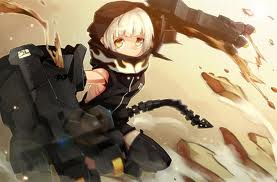
Ogre Arms: These are two giant black metal arms that can be put on like gauntlets. They have an effective STRENGTH of 18, and can deliver punches for 1d8 points of damage for every three levels of the wearer, even from "second rank" or the distance of a spear. They are immune to damage. The wearer can use them to "walk" over damaging substances, like fire, lava, or even acid. The wearer has a metal tail resembling vertebrae that moves to help balance while wearing the arms.
Over time, the Ogre Arms begin to replace the wearer's own arms. For every two days of constant use, the wearer's STRENGTH without the Arms is decreased by 1. When the wearer's effective strength is 5, they can no longer take off the Ogre Arms, as their own arms are twisted into the mechanisms. The wearer's Strength returns to normal as regards the rest of their body, but removing the Ogre Arms will leave them with no arms at all. This item is usually found with the skeleton of the previous owner still attached.
When used by characters of greater than 5th level, another set of Ogre Arms can be manifested. These arms emerge from the wearer's back. The wearer's AC is improved by 2, and the wearer gains an additional punch attack per round.

EDIT 7/25/12 at 9:37 PM: added additional info to the Ogre Arms.

Wednesday, July 4, 2012

Students of the Green Beast (a cult for your science-fantasy game!)

A captive audience.
I rolled on the random cult generator and got Students, Green, and Beast. For "Thing worshipped" I got a construct, golem, animated statue, frankenstein thing, etc. I was kinda still thinking about the moon with lots of crashed spaceships from the Haruspectre post.

A new human convert takes her turn at the "godpedal."

A tiny window into the future?


 Students of the Green Beast are primarily kobolds, but their membership is spreading to other races fast. Their sacred place of worship is kept in the strictest secrecy. In truth, it is a pedal-generator hooked to a television, set up and abandoned by spacemen who crashed here millennia ago. When one of the kobolds pedals on the stationary bike generator, a TV is powered, showing classic giant monster movies of 20th century Earth on a loop. The TV is damaged, so the black and white is green-tinged.
They believe this is a scrying device gifted by the gods, showing the inevitable end-times. This has caused two primary factions of the cult to form. One faction believes they should assist all creatures in farming and civilization, so that there will be many fat creatures for the Green Beast to eat and many tall buildings for it to knock down. The other faction are anarchists and nihilists, as the Green Beast will destroy all so what's the point of caring? 

The two factions remain friendly, as they must share a place of worship, and negotiate who will influence which settlement towards anarchy or order.

Wear on the components of the TV cause it to flicker just beyond the edge of perception, putting any creature watching it into a highly suggestible state. Curious nobles and merchants have been known to suddenly donate their entire fortune to the cult. Both factions of the cult will occasionally kidnap people and force them to watch, delivering a sermon the entire time. They are not consciously aware of the flickering effect, but believe in the convincing power of the images themselves.

The Future.


Tuesday, July 3, 2012

Fire-Lizards of Kalak-Nur, Take 2


Art from here

Revised for clarity and such from this post. See that post for more lifestyle details and motivations.
PC RaceClass
Requirements: STR 9, CON 9
Player may take up to 2 points from INT and assign to CON or STR.
Once Fire Lizard is chosen, -1 CHA +1 STR
HD: 1d8
Max Level: 10 (see below)
AC: 5 or 15, improves by 1 at even numbered levels*
SAVE: as Fighter
ADVANCEMENT: as Dwarf

Being giant lizards, they have no articulated digits and must support themselves on at least three limbs at all times. A Fire Lizard PC cannot pick anything up except in its toothy, smoky maw. They cannot use weapons#, and can only use armor specifically made for them*. They are restricted to magical bracelets, rings, crowns, and anything that can be secured on their horny protrusions to the DM's satisfaction.
Fire Lizard PCs may carry 1 humanoid on their back for every point of STR over 11.
A Fire Lizard PC's attacks progress as indicated:
+1 to hit per level gained.
Level - Attack
1 - Claw 1d6, Bite 1d4, one attack per round but reroll misses once; second hit may use different attack
3 - two claw attacks per round; can breathe smoke that obscures vision instead of one attack; all creatures in 20' -2 to hit (except Fire Lizards) and hiding/sneaking is doubled in radius; lasts 1 round or can be maintained as an attack**
5 - can breathe fire for 2d8 damage instead of one attack-this counts as a magical weapon; claw damage increases to d8
7 - total of 3 attacks per round (claw/claw/fire)

Fire Lizards can carry a great deal of equipment with no effect on their movement.
Successful adventuring Fire Lizards often get their claws enchanted, and have silver claw covers made.
Fire Attacks are almost useless against them: At levels 1-5, they receive a bonus to saves vs fire at double their level; after level 5 they are immune to nonmagical fire attacks, and suffer half damage from magical fire attacks if they fail their save (no damage if saved).
**Lenses can be made from the tears of a Fire Lizard; when worn by another creature, this creature can see as normal in that individual Lizard's smoke breath. They must be made by a master craftsman.
The Blood Knows^: a Fire Lizard can consult the memories of it's parent to try to remember details of any creature, civilization, historical fact, etc. This knowledge fades over time.
85% chance at first level, -10% at even levels. See examples in the comments here. If in doubt, use Zak's Ranger Legend-Lore-ish ability at the bottom of his Random Ranger post.

"At least he doesn't wear armor." Maybe they look like this? Art from here.

When a Fire Lizard reaches 50 years of age or enough XP for a level 11 Fighter, they undergo a great physical change and begin eating everything in sight. Often, before this happens, the Lizard will seek an isolated cave and hoard plenty of food or set traps to lead creatures to it. Within 3 weeks, the Lizard will reproduce asexually, laying eggs.
The adult Fire Lizard passes its knowledge to its offspring through some unknown mechanism; after laying eggs, it is of animal intelligence^ and becomes in all respects like the Fire Lizard entry in the Monster Manual. A PC Fire Lizard must be handed over to the DM at this point as an NPC Monster; however, it will hesitate to attack former companions, effectively giving them a free surprise round despite the circumstances of the encounter.

#Fire Lizards have been known to scoop up weapons in their mouths and toss them in an opponents' direction from time to time.
*if custom armor is made for them, the AC is the armor bonus subtracted from 5 or added to 15

^Thanks to Erik Jensen and David Rollins for ideas in general. David came up with the idea for The Blood Knows ability, and they both had some nice riffs on it.


Thursday, June 28, 2012

Fire Lizards of Kalak-Nur (new race for old school clones)


NOTE: version 2 coming soon...
I read Ian Johnson's entertaining post Ruined By Wizards Dying Planet Death World and wanted in on the fun. I rolled up 11 creatures.


To break up the tedious stuff: I rolled a 1d6 and looked at the Contents table here. If I rolled a 6 then I rolled 1d4 on the Contents table here. Then I counted up the listings in the appropriate section and generated a random number. If the section broke down into subcharts, I'd roll on each and work my way down until I had a specific critter. Wikipedia is really full of Contents Tables that could generate random stuff for your campaign!
Anyway, now I embark on a series of posts about the hypothetical campaign world with the following as the primary intelligent races: Giant Otter, Giant Beetle, Kobold, Fire Lizard, Harpy, Frost Giant, Sirenflower, Crone of Chaos, Marilith, Red Dragon, Treant. Humans may exist as naked, dumb savages, but I didn't roll them, so they won't be intelligent! Not all of what I rolled are practical for PC races, but I got some inspiration for the Fire Lizard. What do y'all think?
SERVE ME

FIRE LIZARDS
Ecology
Young Fire Lizards are 8-10 ft long with grey, red, brown, or black patterns. After the change (see below), they are about 30 ft long and darker. Fire Lizards have roughly human intelligence until they are (40+3d10) years of age. At that time, they become ravenously hungry, eating 1.5 times their body mass daily, growing three times their size in a year, and laying 1d4 eggs. The trauma of this transformation and the chemical changes involved leave them with little more than animal intelligence, highly territorial and violent in the extreme. 
Which is to say, young Fire Lizards are bored as hell. The elders can barely communicate and all the books and art objects get burned whenever one of them goes through the 'change'. The other creatures of Kalak-Nur's vast central caverns and tunnels are not much better, being either pompous, greedy, savage, or otherwise unable or unwilling to intellectually engage. Making ash paintings on cave walls with your breath gets old.
When the easy life they have in their familial pits of lava and stone become too much to bear, some young Fire Lizards head out for adventure. They begin with little knowledge of life beyond Kalak-Nur's central volcanic mountains and tunnels, and are just as likely to emerge in the verdant, rainy, and highly settled east as the dusty, more sparsely populated deserts to the west. Other intelligent races are used to this and welcome the labor companionship, but grow wary the older the Lizard gets. Fire Lizards among society will pay other creatures to read to them or construct book harnesses to hold tomes in front of their faces.
Knowing their eventual fate as huge, savage monsters tends to lead Fire Lizard adventurers to either a grim, fatalistic determination, or a dry, savagely dark wit. Gallows humor is frequent. Some say knowing that their intelligence will some day flee them gives their intellectual relationships a poignancy and bittersweet fervor. Most are intensely loyal to the companions they meet, although some prefer to trivialize intelligence by tricking other races into trouble and strife. Still others revel in physical mastery, creating fleeting surface kingdoms of fear and pain.
When they feel the change coming on, most make a trek back to their fiery ancestral tunnels beneath Kalak-Nur's central mountains. Those of a crueler bent head to heavily populated surface areas, taking their chances for a greater guarantee of edible fodder.


 (Stolen from this guy's awesome DeviantArt. If you are that guy and you want me to take this down, just let me know.)


Characters
Requirements:    STR 9, CON 9
Prime Requisite: STR
HD:                    1D8 
Max Level:         9 + 1d4 (determined at creation)
AC:                     9 or 11, improves by 1/2 level (IE at level 4, AC is 7 or 13)
SAVE:                as Fighter

Being giant lizards, they have no articulated digits and must support themselves on at least three limbs at all times. If on less than 3 legs, the Fire Lizard must make a DEX and STR check per round to remain upright.
A Fire Lizard PC cannot pick anything up except in its toothy, smoky maw. They cannot use weapons, and can only use armor specifically made for them. They are restricted to magical bracelets, rings, and crowns, which can be secured on their horny protrusions.
Fire Lizard PCs may carry 1 humanoid on their back for every point of STR over 10 for 1 hour. (IE STR 15 can carry 1 person for 5 hours or 5 people for 1 hour.)
A Fire Lizard PC's attacks progress as indicated:
Level - Attack
1 - Claw 1d6, Bite 1d4, one attack per round but reroll misses once; second hit must use different attack
3 - reroll 2 misses per round; can breathe smoke that obscures vision in a 10' radius 1/hr instead of an attack; all creatures -2 to hit and hiding/sneaking is doubled in radius; maintaining uses attack for the round
5 - gains a second attack per round if DEX over 11; can breathe fire for 2d4 damage every three rounds
7 - smoke radius is 20', fire damage is 2d6; gains a second attack per round if did not at lvl 5
9 - fire damage is 2d8

Fire Lizards must sleep for 8 hours or suffer -2 to all rolls the following day. Fire Attacks are almost useless against them: At levels 1-5, they receive a bonus to saves vs fire at double their level; after level 5 they are immune to nonmagical fire attacks, and suffer half damage from magical fire attacks if they fail their save (no damage if save).
"We are the best of friends!" "Get the fuck off my back, cow." (from here. If you are the artist and want me to remove this, just let me know.)

Monday, June 4, 2012

Alternate magic system for D&D/OSR Clones/Etc?

All the twists to magic in systems like DCCRPG, Lamentations of the Flame Princess, OSR blogs, and on G+ has got me thinking about designing an alternate system, using numbers from the book, that is both functional and easy to extrapolate from existing rules. If one of the reasons OSR folks enjoy older systems is that non-magic classes don't have defined 'moves', and thus players are encouraged to be creative in thinking of their own, why shouldn't there be a system that opens up this freedom for Magic-Users?
This is just going off the top of my head at the moment.
My thoughts currently look like some weird point buy system, where the points after level 1 are determined by the spells/level charts in class descriptions.
So 1 point per level, and 1 point per spell slot and level on the chart in the PHB. (So a 3rd level Mentzer Magic User would have 7 points: 1 for each level, 1 for each of his 2 first level spell slots, and 2 for his second level spell slot). A first level Magic-User would have 2 points (1 for his level, 1 for his First level spell slot).
No pre-written spells. Slots become points. What do you do with the points?
- Points put towards a spell can add either an effect, an area, or a target.

- Effects: effects cost 1 point per effect per target. Parts of the body count as 1 target each. Effects that cause damage cost 1 point per d4 per target. Effects that cause damage are visible and clearly caused by the caster unless 2 points per d4 of damage are spent to disguise it. Illusions are tricky; the original must be erased before a falsehood can be constructed - making something invisible is 1 pt, making something look like something it's not is 2 points (per target).

- Area: 1 point per 5 feet (or whatever your basic square/unit of area for spells is). Spells affecting targets the cast can see can ignore area in favor of specific targets.

-Targets: 1 point per target. Living things count as 1 target for general damage, and 2 for illusion effects (upper body, lower body). It takes 2 points total (1/effect, 1/target) to damage someone, 3 (1/effect, 2/target) to make them invisible, 4 (2/effect, 2/target) to disguise them. (Called shots can be helped along with point expenditure = spend 2 points to hit your called area on a 19 OR 20, instead of just 20).

Replicating the effects of Magic Missile takes 2 points - 1 target, 1d4 of damage. However, the player gets to describe it however they want without being influenced by the words "Magic Missile"

Replicating Sleep is more tricky - 1 target or 5" is 2 points, etc.

Point burn is possible - extra points can be bought with ill effects. For every point beyond what the Magic User actually has that his/her player wants to put towards a spell or effect, the more likely there is to be a fumble or random effect (or maybe just 1 random detrimental effect per extra point?)

I think it provides a reliable base of spells but the point burn adds a whole field of temptation akin to the corrupting effects of magic many of these OSR clones are trying to get at. A magic-user can be boring ol reliable and do a few things, or more powerful but with more risk.


I'll keep thinking about it, and would be delighted to hear input.

(edited to make illusion stuff clearer.)

Tuesday, May 29, 2012

The Story/Game Sweet Spot

I started my first ongoing campaign in something like 10 years a week and a half ago, and we're meeting again tomorrow. After lurking on G+ and OSR blogs, I was kinda ready for charge-in-and-get-ourselves-killed gaming - that's what I've mostly experienced before. I haven't gamed with these players before, though, and most of them haven't gamed for years. Of course, they surprised me completely.
It became clear during our first session that this group plays their characters as if life is precious. They are careful, and none of them are fighter types (A C&C Thief who is more of a spy, a C&C 0-level magic user, and a 0-level Mountebank jacked from the writeup here initially but will be cut to fit), and all are interested in a level of roleplaying I haven't gotten the chance to do in awhile.  It's going to be an investigator/spy/discover the big conspiracy type of game, but a kill-stuff-and-take-it's-stuff type game.
I couldn't be more pleased! However, I realize that I haven't played in a game like this in awhile that I felt came off successfully. When you take frequent combat off the table, you take out what constitutes the 'game' portion for a lot of people. My concern becomes: how to hit the right combination of 'game' and story.
What I mean is, I and my players prefer to play out things like skill use (there aren't really skills per se as it's Castles and Crusades, but I'm talking about situations that would be skill checks in 3.x and 4.x D&D). I like there to be some mathematical randomness of outcome, and don't want my judgement to be the sole arbiter of success or failure. What, then, are some good strategies for incorporating the more 'game' elements, so it doesn't become amateur theater hour?
What are some good situations that can hit that mix of dice and roleplaying that aren't combats? What are the best ways to balance those?
I have some ideas, of course, and am looking at the story-games forums and various DMGs, but I thought I'd throw it out to see what advice people have.

Sunday, May 27, 2012

Encounter Type and Nine-headed Monster Tables

Roll 1d4 to determine encounter type or do whatever you want:

1. The thing is enraged/a mindless killer, all heads attack no matter what.
2. The thing is wary of intruders and attacks them based upon triggers (PCs getting near eggs, treasure, mate; PCs mentioning a certain person or concept, etc).
3. Diplomatic encounter; the thing has knowledge or influence the PCs need, but the heads' different personalities fight over whether it should help them; different methods will persuade different heads, some conflicting. (method that convinces one head may anger another)
4. The thing needs something the PCs have (item, knowledge, influence) but looks like something the PCs need to kill; it will defend itself, but stop attacking if the PCs let up. Killing it is Evil and will enrage townsfolk/powerful wizard/the PCs' God.

CHAOS HYDRA - Nine heads - roll** nine times to start, (optionally: twice whenever a head is severed and two grow in place):

1. Bear head in clown makeup; bite attacks as bear & fear effect
2. Mummy head; berates PCs for modern dress/language/behavior while casting spells at them; smells bad
3. Baby dragon head; bite/breath attacks as baby dragon; wants to know where mommy is
4. Adult dragon head; bite/breath as appropriate; wants treasure
5. Sleazy Adult dragon head; wants to gamble with PCs; cheats magically
6. Old Dragon head; wants other heads to shut up so it can sleep
7. Orc chieftain head; just wants respect
8. Snake head; always lies; bite/poison attack
9. Dumb bearded guy; always tell truth, accidentally; one strong arm grows next to this head holding a club weapon
10. Giant fist that punches PCs forever
11. Lion head; will be appeased if PCs convince him he is their leader; roar/bite attacks
12. Wolf head; just wants to be fed -"I don't think you head me correctly. What you heard was: 'Give me A LOT of your food'; what I said was 'Give me ALL of your food.'"
13. Mind-flayer head
14. Neck-Beard; wants to teach PCs new games and play them; all heads will be placated while PCs are playing games with him, but immediately attack if PCs express boredom, try to leave, or try another tactic
15. *Blonde animal or human head with ridiculous pompadour and underbite; Says, "heh heh, heh hehe," a lot and wants to be shown cool stuff like fire; if unimpressed, PCs being eaten by other heads is cool stuff; if fed and shown something REALLY cool, cowl will drop over head and frenzied sounds emerge as this head attacks other heads while creature runs in random pattern
16. Portable hole/vacuum; PC are sucked in 1/rd if fail STR check; stored until end of battle or quest completed inside. Inside is an alternate dimension that is either a tricky trap maze with Cenobite-type demons or a creepy alternate version of the PCs' home town OR BOTH
17. Deer head; antler attack; plant foods makes it happy
18. Demon head; wants to be freed from rest of creature and returned to hell
19. Entire baby with god-like strength and ego
20. Human head with decaying mask and crazy eyes; invokes power of maddening dark forces from beyond understanding that generally put the PCs to sleep

*ALT for 15 or any entries not appropriate to game/setting: head of dead former companion or family member that attempts to convince PCs that they were the ones who should have died; is magically persuasive and induces PCs to suicide

**DOUBLE ALTS to replace any human heads above for extra monsterness or whole table above for simplicity:
1. Cockatrice head - beak strike turns PC to stone
2. Crocodile head
3. Medusa head
4. Frog head with tongue attack
5. Insect head with acid vomit attack
6. Giant snake head; speaks common and wants to be told how pretty it is; bite/poison attacks

Sunday, May 20, 2012

What's your relationship to the battlemat & minis?

In a few mere hours, I begin DMing my first homebrewed campaign in many years. It's got me re-evaluating some of my basic assumptions about how to run and play, and I'm curious what other people think. At the moment, I'm wondering about the battlemat and minis.

Playing 2E in the Dallas area in the 90s, I played with a large community that used the battlemat in a specific way. Pickup games (at cons etc) used it the same way, if I recall correctly. From what I've read on some OSR blogs, groups in other areas didn't use battlemats or minis at all until 3.0.

When first sitting down to play, the battlemat would usually already be down, totally blank. Players tended to put their minis in front of them at the table. Everyone usually had a painstakingly painted mini. During setup and initial RPing, the DM might draw something out to help players visualize it occasionally, usually not to scale. The mat would be largely blank and minis unused until things turned hostile. All parts of the game before the first fight did not use minis at all unless a fight was likely.

When we had got to the first fight, or an RPing situation turned hostile, the DM would draw the area out on the mat and would dictate or negotiate where each character's mini was at the start of the conflict. Then movement, weapon/spell range, etc would come into play, and the mat/minis would be used. After the last creature was defeated, trap disarmed, or chest searched, the mat and minis would be largely ignored until the next conflict. 

So, even trap disarming or searching weren't mapped unless related to a fight. Occasionally, it would be used in a situation that was only likely to cause a fight - sneaking past the Orc camp, for instance. Once in a while it would be used for long wilderness travel, to show the players the general area and track progress between random encounters. Of course, there were exceptions for situations where position was vital, but they were rare.

This method caused some interesting metagame tension. If the map came out, or if the DM drew an area to scale and had players place minis, you knew a situation was likely to turn hostile or a monster was around the corner. Players tried not to overtly let this metagame knowledge affect their character, but some would suddenly be more cautious or ask, "Do we hear anything?" 

A clever DM would use it to their advantage - even if no fight was planned. If the players or characters were getting unfocused, bored, fighting with each other, or feeling directionless, it was a tool to bring focus back to the game. It said, this next part is important. This only worked if the majority of times there actually was a fight coming (or narrowly avoided), but when used judiciously, the players never knew. A DM could use it to create tension, and players would feel impossibly clever for having avoided a fight/explosion. (...or players spoiling for a fight would rush back in, banging pots together to attract the fight you thought you had avoided!)

In the 4E games I played after coming back into the hobby (and before discovering the OSR), the mat was used for everything. If something happened in-game at all, the battlemat was used. Peaceful interactions? On the mat. character intros? On the mat. I know this is likely unique to the groups I played with, as is the method above, but I found it very video-gamey - the mat was the virtual world, and everything happening to one's "avatar" had to happen on it, not in your imagination. (not edition warring here, relating my subjective unique butterfly feelings about a specific group. I know 4e can be used differently, and with the method above.)

So how did/do you use the minis, and battlemat?