Showing posts with label dnd. Show all posts

Saturday, February 9, 2013

Random Class Generator or "What are the NPCs over the next hill like?"

While cool, it's utility when used as directed is low for the majority of DMs. OK, occasionally you're going to let a player play his flying Dwarf with Thief abilities that uses magic like a M-U at a 60% level penalty, because flying monkey, right? Or maybe you run a special session where you let everybody use one of these. Still, you use it once and everyone's got a character and done til someone dies. And that's fine, but after looking at the results a few times I think there's a way this generator is useful to the DM pretty frequently. That starts at the *

The first class it generated for me is one of the most immediately useable and straightforward things I think I've seen from a generator. This is the spear-carrying hunter who can sneak up on prey. It also makes a lot of sense for a Harpooneer or Landsknecht that decides to go adventuring. In more practical terms, a long-range backstabber (if there's some player skill and party coordination going on.)
I think I'd say they get a -2 to hit with non-polearms instead of not being able to use them at all, but the rest can play as it lays.
Requirements: none
Prime Requisite: STR
Hit Points
LevelHit Points
11d8
22d8
33d8
44d8
55d8
66d8
77d8
88d8
99d8
109d8
119d8
129d8

Armour Members of this class may not wear any armour. 
 Weapons Members of this class may only use pole weapons (polearm, lance, javelin, spear).
Attacking Members of this class roll to attack as a magic-user.
Magic Items Members of this class have no restrictions on the use of magic items.
Note that, for magic armour, weapons and shields, characters can only use a magic item if they could use the normal version of that item.
Thief Skills Members of this class have the thief skills, including the bonus when attacking unnoticed from behind, of a thief of their level.
Saves Members of this class save as a fighter of their level.
Advancement
LevelXP required
10
21760
33520
47040
514080
628160
756320
8110000
9220000
10255000
11340000
12425000
from here
Or this guy:


However, here's where the juice comes in for the DM. You can use this to extrapolate the weird cultural practices of the NPCs or even Monsters encountered in the next room/hex/tribe/whatever. This would probably work well in combination with Zak S's Gods as Places to fully flesh out a hex. (EDIT: If you're going soup-to-nuts and want more monster/NPC stats like attacks and AC, try this from Abulafia or this from donjon to add to the below. Works well to flesh out Villain Warbands.)
Let's say you're using Carcosa (either the book or generator) to do the heavy lifting for hexcrawling in your game, but you're not running a Carcosa game.
"Hmmm...Village of 220 Ulfire Men...so in my game, those are..."   
Requirements: STR 9
Prime Requisites: STR, CON
OK, so these folks really value being tough and feats of strength. They probably go shirtless and either live physically demanding lives and/or have strength training and scheduled contests.
Hit Points
LevelHit Points
11d4
Hmm, but they're easy to kill. Maybe they're small? Like, little strong pygmy dudes? I'd use this as the number of HD of NPCs, not the number of HP. Strong but low HD. 1-4 d8s.
ArmourMembers of this class may wear any armour and carry a shield.
WeaponsMembers of this class may only use pole weapons (polearm, lance, javelin, spear).
Shit, little strong pygmy dudes with polearms. As the next entry tell us, they attack better than magic users, but maybe not as good as fighters.
Attacking Members of this class roll to attack as a cleric or thief.
Magic Items Members of this class have no restrictions on the use of magic items.
Note that, for magic armour, weapons and shields, characters can only use a magic item if they could use the normal version of that item.
Magic-User Spells Members of this class can cast magic-user spells as a magic-user of 60% of their level - that is:
So there's a 60% chance a party of these guys has a shaman or other magic user, and/or a 60% chance each one has some spell or tribal charm that has an effect.
Thief SkillsMembers of this class can move silently as a thief of their level.
SavesMembers of this class save as a thief of their level.
Special AbilitiesAt level 7, members of this class gain the special abilities of a dwarf (60 foot infravision, detect traps, false walls etc).
"So these folks prefer polearms, value Strength, but aren't hard to kill. They're sneaky and magic use is widespread - 60% of the population. Eventually they get Dwarf abilities...maybe through some practice where meditation on the Erf pays off. OK, so I've got a pygmy tribe (or Goblin culture, etc) that uses magic and moves quietly and practices some kinda warrior mysticism and for some reason they revere the polearm - probably cause they value Strength but are easy to kill. OK, Ulfire Men are that now." Werido demihuman tribe infesting the ancient temple? DONE.
from here

--
I'd love to see what weirdo classes you folks get outa this, or weird cultures extrapolated therefrom.

Here is a cool pictures I came across looking for relevant images:


Jeffrey Jones does a great Conan

Wednesday, July 25, 2012

The Culper Ring and Ogre Arms (2 magic items for old school games)

"I put on this ring I got from the treasure horde, and all of a sudden the fruit cart guy is whispering about three clouded circles and strangers are trying to kiss me and a guy takes me in a room for 'debriefing'!"

The Culper Ring: The wearer of this ring is mistaken for a member of a far-flung and very secret organization. Seemingly innocent and mundane PCs will whisper strange codes and pass along bits of information relevant to "The Mission," which is never explained. The wearer's role and position within the organization is never made clear. While most of the information passed along is useless and most of these "contacts" are never seen again, occasionally a tidbit will be useful later.
Whether the ring causes this organization to come into being or the wearer is mistaken for a specific person is up to the DM.
If the PC is actively seeking information about something, there is a chance a contact in "The Organization" can find something useful. Roll a d20. The difficulty is 10, plus the number of bits of information the PC can relate back from previous encounters (or simply the number of previous contacts the wearer's player can recall, at the DM's discretion. This may be modified by CHA).
 If the wearer needs a safe house to hide out or have a meeting, the organization can provide one 65% of the time, but may not allow the wearer or companions to leave for 1d4 days.
The wearer may also be attacked by members of rival organizations or assassins. There is a 25% chance in any city, increased by 10% for every time the wearer has gained information or a safe house.


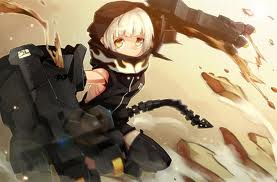
Ogre Arms: These are two giant black metal arms that can be put on like gauntlets. They have an effective STRENGTH of 18, and can deliver punches for 1d8 points of damage for every three levels of the wearer, even from "second rank" or the distance of a spear. They are immune to damage. The wearer can use them to "walk" over damaging substances, like fire, lava, or even acid. The wearer has a metal tail resembling vertebrae that moves to help balance while wearing the arms.
Over time, the Ogre Arms begin to replace the wearer's own arms. For every two days of constant use, the wearer's STRENGTH without the Arms is decreased by 1. When the wearer's effective strength is 5, they can no longer take off the Ogre Arms, as their own arms are twisted into the mechanisms. The wearer's Strength returns to normal as regards the rest of their body, but removing the Ogre Arms will leave them with no arms at all. This item is usually found with the skeleton of the previous owner still attached.
When used by characters of greater than 5th level, another set of Ogre Arms can be manifested. These arms emerge from the wearer's back. The wearer's AC is improved by 2, and the wearer gains an additional punch attack per round.

EDIT 7/25/12 at 9:37 PM: added additional info to the Ogre Arms.

Monday, June 4, 2012

Alternate magic system for D&D/OSR Clones/Etc?

All the twists to magic in systems like DCCRPG, Lamentations of the Flame Princess, OSR blogs, and on G+ has got me thinking about designing an alternate system, using numbers from the book, that is both functional and easy to extrapolate from existing rules. If one of the reasons OSR folks enjoy older systems is that non-magic classes don't have defined 'moves', and thus players are encouraged to be creative in thinking of their own, why shouldn't there be a system that opens up this freedom for Magic-Users?
This is just going off the top of my head at the moment.
My thoughts currently look like some weird point buy system, where the points after level 1 are determined by the spells/level charts in class descriptions.
So 1 point per level, and 1 point per spell slot and level on the chart in the PHB. (So a 3rd level Mentzer Magic User would have 7 points: 1 for each level, 1 for each of his 2 first level spell slots, and 2 for his second level spell slot). A first level Magic-User would have 2 points (1 for his level, 1 for his First level spell slot).
No pre-written spells. Slots become points. What do you do with the points?
- Points put towards a spell can add either an effect, an area, or a target.

- Effects: effects cost 1 point per effect per target. Parts of the body count as 1 target each. Effects that cause damage cost 1 point per d4 per target. Effects that cause damage are visible and clearly caused by the caster unless 2 points per d4 of damage are spent to disguise it. Illusions are tricky; the original must be erased before a falsehood can be constructed - making something invisible is 1 pt, making something look like something it's not is 2 points (per target).

- Area: 1 point per 5 feet (or whatever your basic square/unit of area for spells is). Spells affecting targets the cast can see can ignore area in favor of specific targets.

-Targets: 1 point per target. Living things count as 1 target for general damage, and 2 for illusion effects (upper body, lower body). It takes 2 points total (1/effect, 1/target) to damage someone, 3 (1/effect, 2/target) to make them invisible, 4 (2/effect, 2/target) to disguise them. (Called shots can be helped along with point expenditure = spend 2 points to hit your called area on a 19 OR 20, instead of just 20).

Replicating the effects of Magic Missile takes 2 points - 1 target, 1d4 of damage. However, the player gets to describe it however they want without being influenced by the words "Magic Missile"

Replicating Sleep is more tricky - 1 target or 5" is 2 points, etc.

Point burn is possible - extra points can be bought with ill effects. For every point beyond what the Magic User actually has that his/her player wants to put towards a spell or effect, the more likely there is to be a fumble or random effect (or maybe just 1 random detrimental effect per extra point?)

I think it provides a reliable base of spells but the point burn adds a whole field of temptation akin to the corrupting effects of magic many of these OSR clones are trying to get at. A magic-user can be boring ol reliable and do a few things, or more powerful but with more risk.


I'll keep thinking about it, and would be delighted to hear input.

(edited to make illusion stuff clearer.)

Tuesday, May 29, 2012

The Story/Game Sweet Spot

I started my first ongoing campaign in something like 10 years a week and a half ago, and we're meeting again tomorrow. After lurking on G+ and OSR blogs, I was kinda ready for charge-in-and-get-ourselves-killed gaming - that's what I've mostly experienced before. I haven't gamed with these players before, though, and most of them haven't gamed for years. Of course, they surprised me completely.
It became clear during our first session that this group plays their characters as if life is precious. They are careful, and none of them are fighter types (A C&C Thief who is more of a spy, a C&C 0-level magic user, and a 0-level Mountebank jacked from the writeup here initially but will be cut to fit), and all are interested in a level of roleplaying I haven't gotten the chance to do in awhile.  It's going to be an investigator/spy/discover the big conspiracy type of game, but a kill-stuff-and-take-it's-stuff type game.
I couldn't be more pleased! However, I realize that I haven't played in a game like this in awhile that I felt came off successfully. When you take frequent combat off the table, you take out what constitutes the 'game' portion for a lot of people. My concern becomes: how to hit the right combination of 'game' and story.
What I mean is, I and my players prefer to play out things like skill use (there aren't really skills per se as it's Castles and Crusades, but I'm talking about situations that would be skill checks in 3.x and 4.x D&D). I like there to be some mathematical randomness of outcome, and don't want my judgement to be the sole arbiter of success or failure. What, then, are some good strategies for incorporating the more 'game' elements, so it doesn't become amateur theater hour?
What are some good situations that can hit that mix of dice and roleplaying that aren't combats? What are the best ways to balance those?
I have some ideas, of course, and am looking at the story-games forums and various DMGs, but I thought I'd throw it out to see what advice people have.

Sunday, May 20, 2012

What's your relationship to the battlemat & minis?

In a few mere hours, I begin DMing my first homebrewed campaign in many years. It's got me re-evaluating some of my basic assumptions about how to run and play, and I'm curious what other people think. At the moment, I'm wondering about the battlemat and minis.

Playing 2E in the Dallas area in the 90s, I played with a large community that used the battlemat in a specific way. Pickup games (at cons etc) used it the same way, if I recall correctly. From what I've read on some OSR blogs, groups in other areas didn't use battlemats or minis at all until 3.0.

When first sitting down to play, the battlemat would usually already be down, totally blank. Players tended to put their minis in front of them at the table. Everyone usually had a painstakingly painted mini. During setup and initial RPing, the DM might draw something out to help players visualize it occasionally, usually not to scale. The mat would be largely blank and minis unused until things turned hostile. All parts of the game before the first fight did not use minis at all unless a fight was likely.

When we had got to the first fight, or an RPing situation turned hostile, the DM would draw the area out on the mat and would dictate or negotiate where each character's mini was at the start of the conflict. Then movement, weapon/spell range, etc would come into play, and the mat/minis would be used. After the last creature was defeated, trap disarmed, or chest searched, the mat and minis would be largely ignored until the next conflict. 

So, even trap disarming or searching weren't mapped unless related to a fight. Occasionally, it would be used in a situation that was only likely to cause a fight - sneaking past the Orc camp, for instance. Once in a while it would be used for long wilderness travel, to show the players the general area and track progress between random encounters. Of course, there were exceptions for situations where position was vital, but they were rare.

This method caused some interesting metagame tension. If the map came out, or if the DM drew an area to scale and had players place minis, you knew a situation was likely to turn hostile or a monster was around the corner. Players tried not to overtly let this metagame knowledge affect their character, but some would suddenly be more cautious or ask, "Do we hear anything?" 

A clever DM would use it to their advantage - even if no fight was planned. If the players or characters were getting unfocused, bored, fighting with each other, or feeling directionless, it was a tool to bring focus back to the game. It said, this next part is important. This only worked if the majority of times there actually was a fight coming (or narrowly avoided), but when used judiciously, the players never knew. A DM could use it to create tension, and players would feel impossibly clever for having avoided a fight/explosion. (...or players spoiling for a fight would rush back in, banging pots together to attract the fight you thought you had avoided!)

In the 4E games I played after coming back into the hobby (and before discovering the OSR), the mat was used for everything. If something happened in-game at all, the battlemat was used. Peaceful interactions? On the mat. character intros? On the mat. I know this is likely unique to the groups I played with, as is the method above, but I found it very video-gamey - the mat was the virtual world, and everything happening to one's "avatar" had to happen on it, not in your imagination. (not edition warring here, relating my subjective unique butterfly feelings about a specific group. I know 4e can be used differently, and with the method above.)

So how did/do you use the minis, and battlemat?